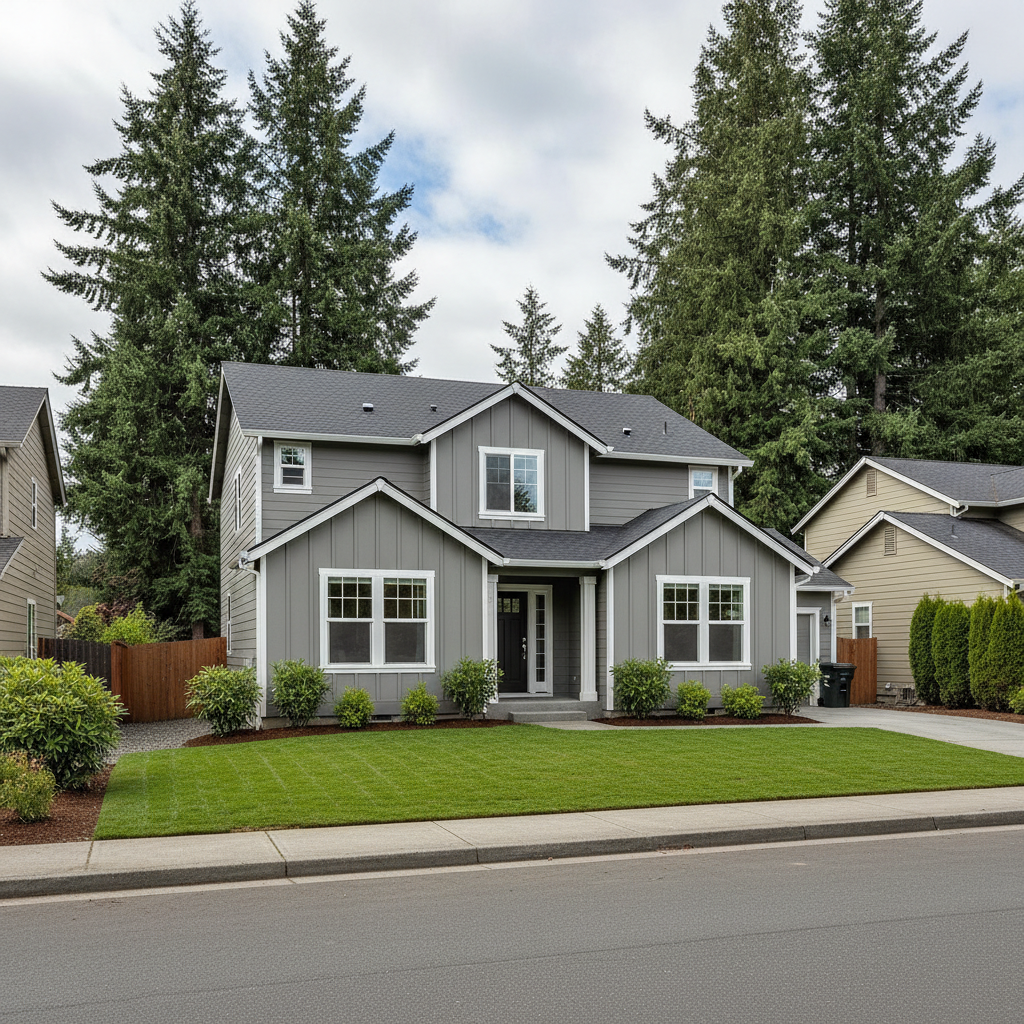
Ever notice how the wind really howls right when it hits the plateau around here? If you live out near Buckley Street or up closer to the foothills, you already know what a strong Cascade windstorm can do to a roof. Last winter, we saw gusts that ripped shingles right off houses, dropped massive fir branches onto gutters, and drove rain sideways into siding that has held strong for twenty years. When storm damage hits your Enumclaw home, you do not need a corporate franchise from three states away. You need someone who knows how our local weather behaves.
Why Enumclaw Weather Hits Houses Differently
We get a double whammy in this town. First, we sit right in the path of heavy windstorms coming straight out of the mountain passes. Second, our autumn and winter moisture does not just fall straight down, it gets driven hard against exterior walls for days on end. That combination tests every weak spot in your home envelope. If you have older cedar siding or a roof that has seen a few too many mountain winters, high winds will find those vulnerabilities fast. Water gets behind the flashing, moisture creeps into the attic, and suddenly a simple wind event turns into a major interior leak.
Property owners often call out-of-town contractors after a big storm because they see a billboard on Highway 410. But those crews often miss the subtle issues specific to our region. Prime Shield Restoration has climbed on roofs all over the plateau, from the acreage properties out toward Enumclaw-Watson Road down to the older historic homes near downtown. We know what kind of materials hold up to our specific climate and what fails.
The Real Cost of Waiting on Repairs
When a limb crashes onto your roof or a patch of shingles blows off during a midnight gale, it is easy to think you can just slap a tarp over it and wait for spring. That is not a good idea around here. With the amount of rain we get between October and April, even a small opening lets in enough moisture to start rot or mold within days. Prime Shield Restoration went out to a house near the fairgrounds last month where a minor roof leak from a November storm had been ignored. By January, the rafters were soaked through and the drywall in the master bedroom was sagging. Fixing it cost ten times what a quick emergency repair would have run right after the storm.
What to Look for After a Major Blow
- Missing or cracked shingles scattered across your lawn or driveway
- Dents in your metal gutters or flashing from flying debris
- Water stains appearing on your ceilings or upper walls
- Doors or windows that suddenly stick because the house frame shifted from wind pressure
If you spot any of those issues, get someone out there to look at it right away. You want a local crew that shows up on time, gives you a straight answer, and does not try to upsell you on work you do not actually need. We live and work right here in this community, and our reputation is built on doing the job right the first time so you can get back to normal life without worrying about the next big storm coming.